Global wine production in 2024: a historic low
Global wine production entered a new chapter in 2024, marked not by growth, but by resilience. For the second year in a row, producers across the globe have had to navigate challenging conditions, from erratic weather to changing market dynamics. According to the latest data from the OIV (International Organisation of Vine and Wine), worldwide wine production has dropped to its lowest level in over 60 years.
In this article we dive deeper into the largest producing countries and the changes in world wine production during 2024.
What is wine production?
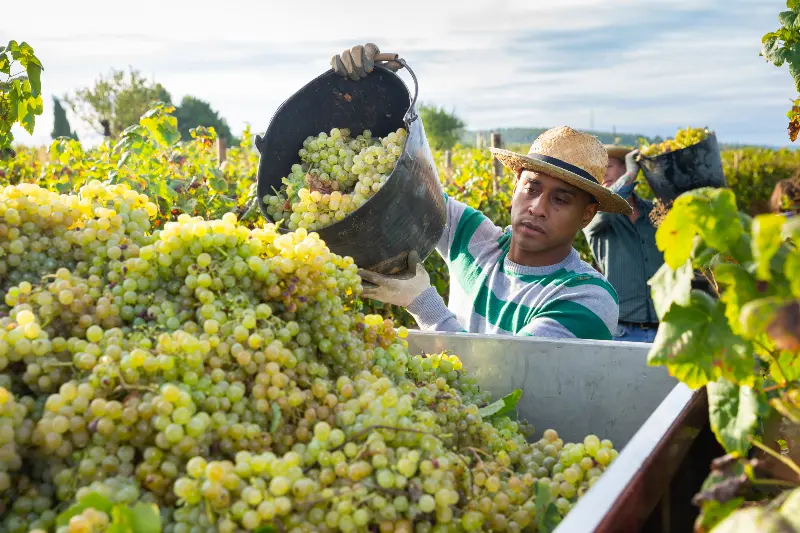
Wine production refers to the process of converting harvested wine grapes into bottled wine. This involves viticulture (grape growing), harvesting, winemaking, aging and bottling. Production volumes are typically measured in million hectolitres (mhl) and tracked annually by country and hemisphere.
Why it matters for the global wine trade
Wine production trends can influence global supply availability, pricing and trade flow. For importers, staying informed about production trends is helpful for planning procurement volumes, selecting sourcing regions and navigating future market shifts. In years of low output, competitive supply and quality variability may also impact sourcing strategies.
2024: The lowest global wine production in decades
In 2024, global wine production (excluding juice and musts) was estimated at 225.8 million hectolitres, marking a 4.8% decline from 2023. This is the lowest level since 1961 and reflects a continuation of the climate and market-driven pressures seen the year before.
Key factors behind the decline:
- Extreme climate events: Frosts, droughts, and heavy rains disrupted vineyard conditions globally.
- Increased disease pressure: High humidity and weather variability favoured fungal outbreaks.
- Market-related adjustments: Inventory levels and lower consumption volumes influenced production in certain regions.
Northern Hemisphere overview
European Union: Climate extremes across the board
The EU, traditionally home to the largest producing nations, recorded 138.3 mhl, its lowest volume since the early 2000s. Countries faced both ends of the weather spectrum, from hydric stress to excessive rainfall, leading to inconsistent yields.
- Italy: Maintained global leadership with 44.1 mhl, a 15% increase from 2023 but still below the five-year average. Northern regions saw hailstorm-related damage.
- France: Saw a steep decline to 36.1 mhl (−23.5% YoY), its lowest since 1957. Challenges included fungal diseases and poor flowering conditions.
- Spain: Produced 31.0 mhl, a 9.3% recovery from 2023, thanks to favourable conditions in Castilla-La Mancha and Extremadura.
Other notable EU performances:
- Germany: 7.8 mhl (−9.8%)
- Portugal: 6.9 mhl (−8.2%)
- Romania: 3.7 mhl (−19.8%)
- Austria: 2.2 mhl (−8.8%)
Some nations showed positive trends:
- Hungary: 2.7 mhl (+10%)
- Greece: 1.4 mhl (+1.4%)
Neighbouring and Asian producers
- Russia: Posted a strong 5.4 mhl (+19.3%)—its highest since 2015.
- Georgia: Reached 2.4 mhl, the best output since the start of the century.
- Moldova: Fell sharply to 1.1 mhl (−39.7%).
- China: Declined to 2.6 mhl (−17%), continuing a multi-year trend.
United States: Heat and inventory impact volumes
In the USA, wine production fell to 21.1 mhl (−17.2% from 2023), the lowest in over a decade. California, responsible for the majority of U.S. wine output, saw its smallest harvest since 2004 due to extreme heat.
Southern Hemisphere overview
A second consecutive low year
The Southern Hemisphere recorded 45.8 mhl in 2024, down 3.6% from 2023 and nearly 14% below the five-year average. Extreme weather remained a dominant factor, with smaller harvests seen across most major producing countries.
- Argentina: Led the region with 10.9 mhl (+23.3%), recovering from a poor 2023 but still slightly under its average.
- Chile: Produced 9.3 mhl (−15.6%) amid drought and delayed harvests.
- Brazil: Dropped sharply to 2.1 mhl (−41%), with heavy spring rains causing mildew outbreaks.
- South Africa: Reached 8.8 mhl (−5.1%), the lowest since 2005. Weather challenges included frost, wind damage, and flooding.
Oceania: Mixed results
- Australia: Produced 10.2 mhl (+5.3%), a modest rebound from 2023 yet 16% below the five-year norm.
- New Zealand: Output fell to 2.8 mhl (−21.2%) following frost damage in Marlborough during flowering.

When to consider production trends
Importers of wine may want to monitor annual wine production updates to:
- Evaluate potential shifts in supply and availability
- Adjust sourcing strategies or supplier diversification plans
- Forecast seasonal pricing and transport needs
Production reports can be especially helpful ahead of key planning periods, such as buying cycles or product launches that align with vintage releases.
Summary of global wine production in 2024
- Global production: 225.8 mhl (−4.8% YoY), lowest since 1961
- EU output: 138.3 mhl, with Italy leading despite challenges
- Weather extremes: Major driver of reduced yields
- Southern Hemisphere: Historic lows, notably in Chile, Brazil, and South Africa
- U.S. production: Smallest California harvest in nearly 20 years
We support the global wine industry
Whether importing from France, Australia, or South Africa, understanding how shifts in wine production affect logistics is essential. Lower harvest volumes can lead to new sourcing patterns, urgent delivery timelines, or increased demand for temperature-controlled transport.
Hillebrand Gori helps wine importers adapt to changing supply dynamics with tailored transport services, consolidation options and real-time tracking tools. From bulk shipments to small orders, our expertise helps each bottle to arrive in optimal condition.
Learn more in our Knowledge Centre or explore related articles on our blog.
Reviewed by Hillebrand Gori
In 2024, global wine production (excluding juice and musts) was estimated at 225.8 million hectolitres, the lowest volume recorded since 1961.
Italy led global wine production in 2024 with 44.1 million hectolitres, followed by France and Spain.
Extreme weather events such as droughts, frost, and heavy rainfall have become more frequent, affecting grape yields and creating challenges for growers in both hemispheres.
How can we help your business grow?